Revive’s decks and website, rebuilt as systems.
Revive was an Amazon ad agency becoming a software company. As Lead Creative Designer, I gave its sales team one presentation system for every pitch, and built the website that sells its platform, Convoy.
A set of caricatures, then a website pitch.
My journey at Revive began unconventionally, ignited by a simple set of digital caricatures I created for Adam Goering, our CEO. As I crafted those illustrations, I connected with Adam. I grew curious about the company, leading me to propose an entirely new website.
The initial pitch felt exhilarating, creative and vibrant, but as we delved deeper, it became clear that a website’s true essence lies in its content and user experience. Understanding who visits and what they need to know shifted our approach. The design evolved dramatically, marking a pivotal moment for me. My first real lesson at Revive was powerful: content drives design, and grasping the user journey is essential.
When I joined, Revive was firmly established as an agency dedicated to helping brands thrive on Amazon, with services spanning sponsored ads, streaming TV and the ever-expanding realm of digital media. But change was in the air as the company began building software. That software took shape as Convoy, a platform designed to streamline B2B advertising by harnessing Amazon’s power. “Backed by Amazon DNA” became our mantra. Selling software demanded a cohesive, unified approach: everything a prospective buyer encountered needed to exude confidence and clarity.
Revive’s decks didn’t match. I turned them into one system.
Stepping into Revive, my first mission was straightforward: revamp the existing collateral. What began as a beautification task quickly unraveled into something deeper. Making decks and one-sheets appealing was important, but a new document would follow the same chaotic pattern unless I used a structured approach.
So I developed a template system: shared layouts, typography, colours and structure for all documents. Each new piece came out organised, polished and unmistakably Revive, and the system became the thread that connected everything that came next.
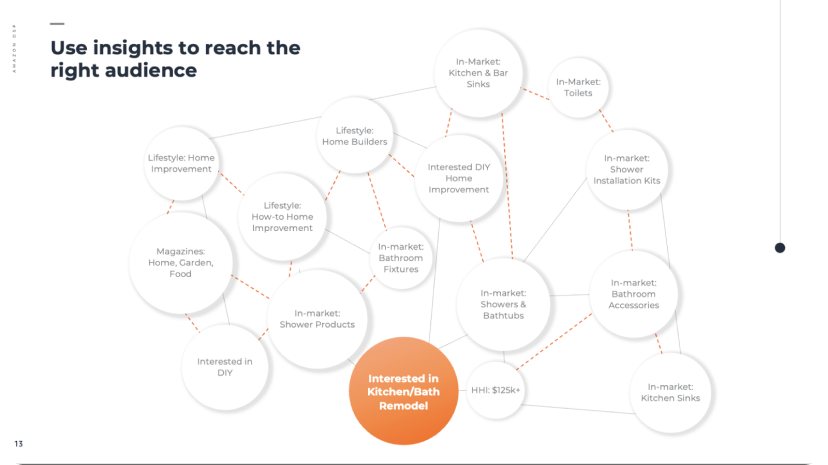
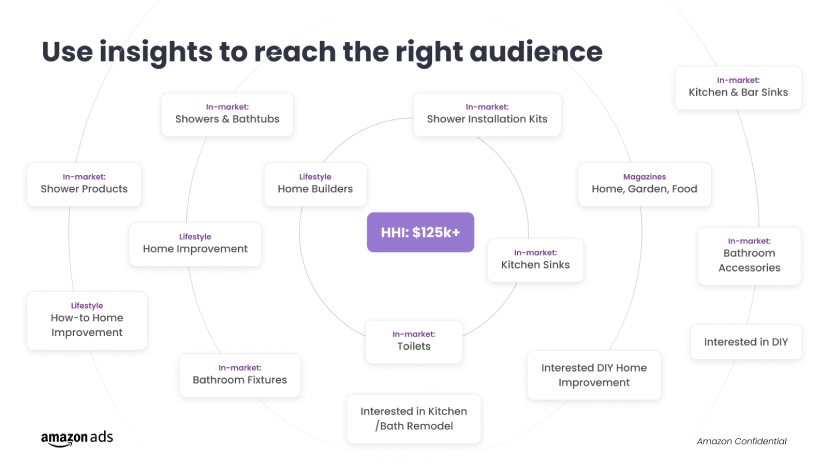
It held up across very different decks: a sales pitch, Digiday and Finovate.
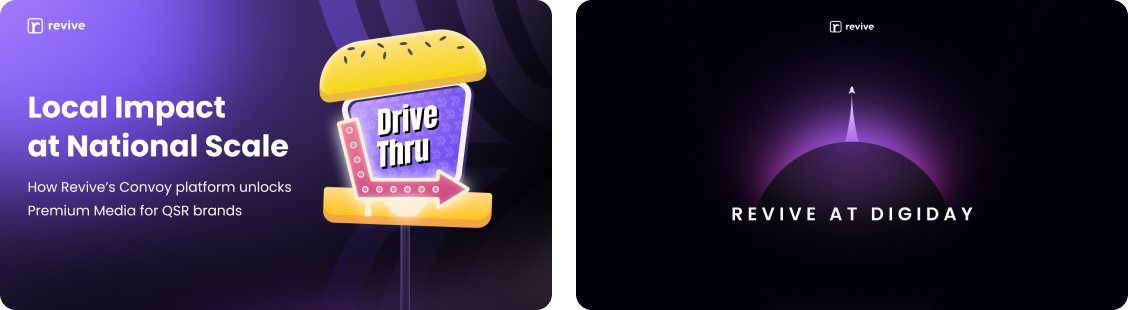
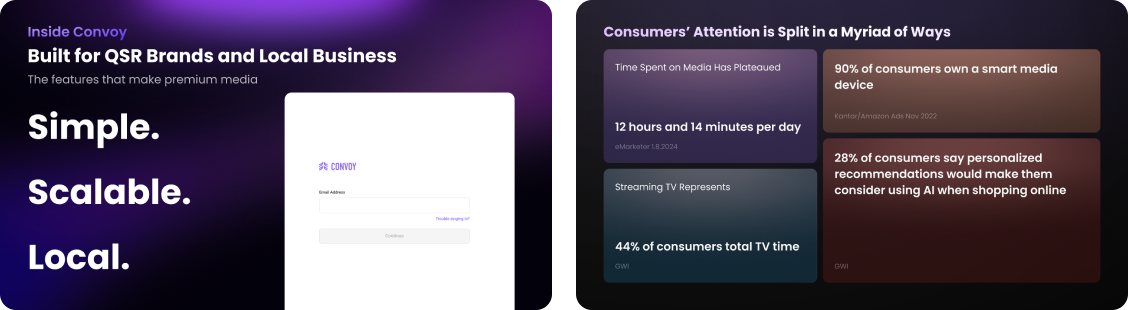
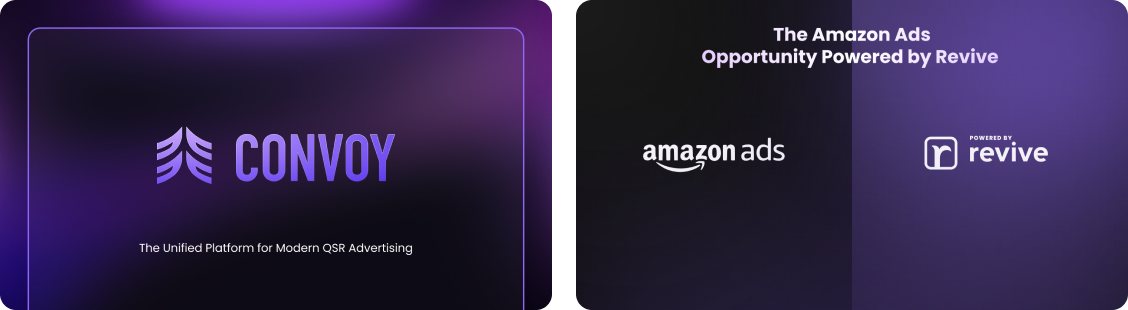
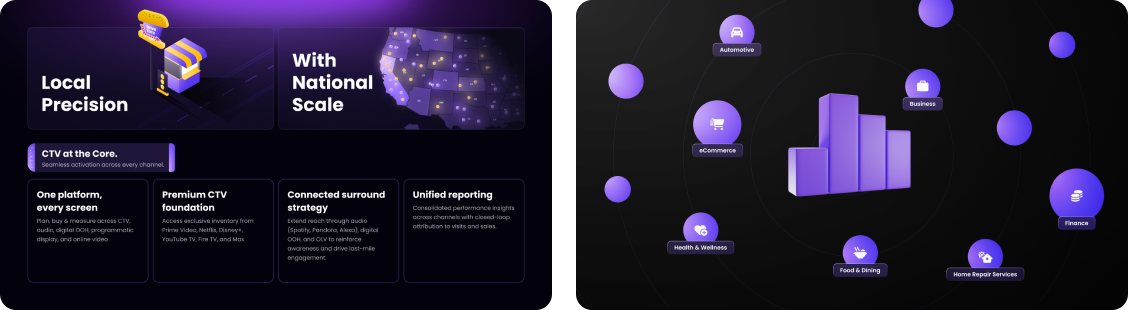
By the time I left, Revive’s presentations had found their voice and identity. Danielle Shamos, our CRO, once mentioned that Amazon had praised our presentations, which was immensely gratifying.
My first pitch looked great. It wasn’t the right website.
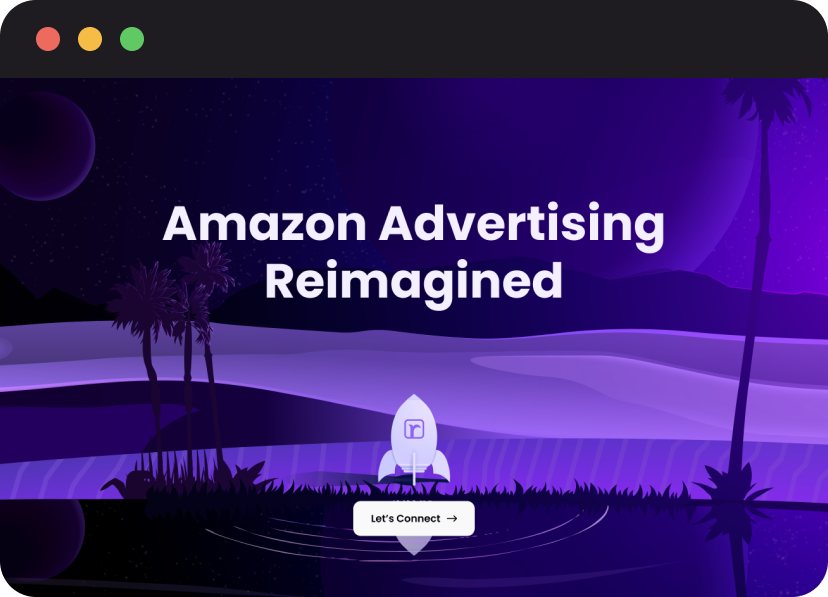
I pitched Revive a bold new homepage. Once we worked out who visits and what they need to read, it changed completely. I rebuilt the site with Haley Ochoa, then redesigned it again when Convoy became the business.
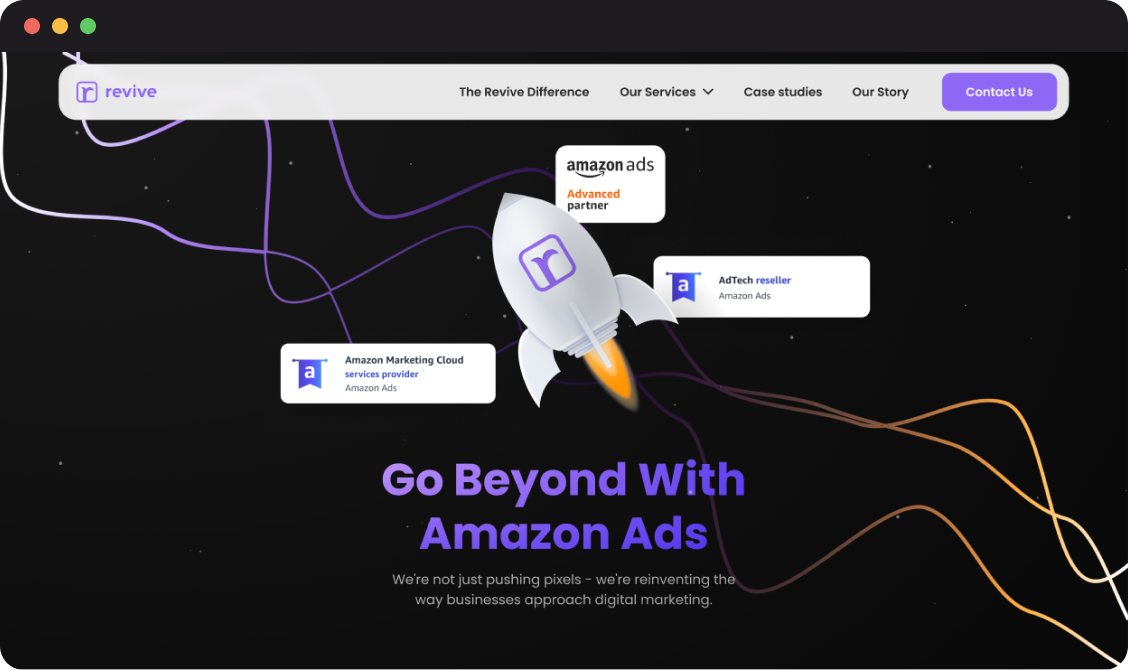
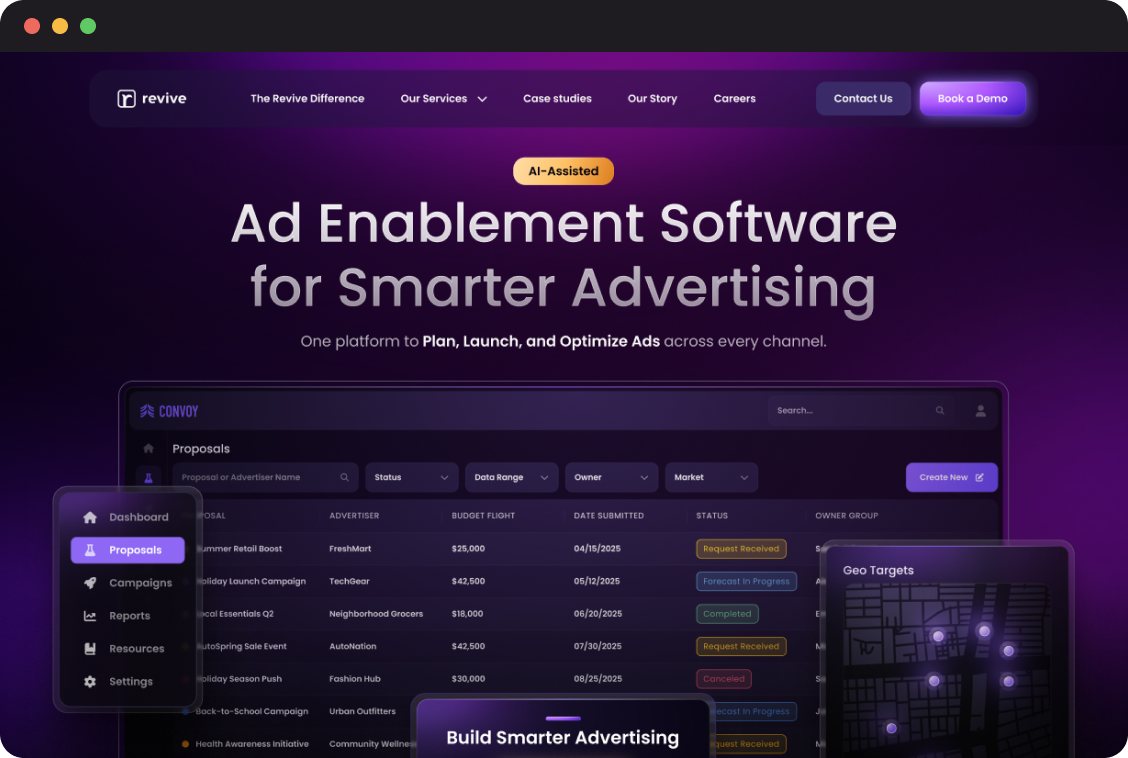
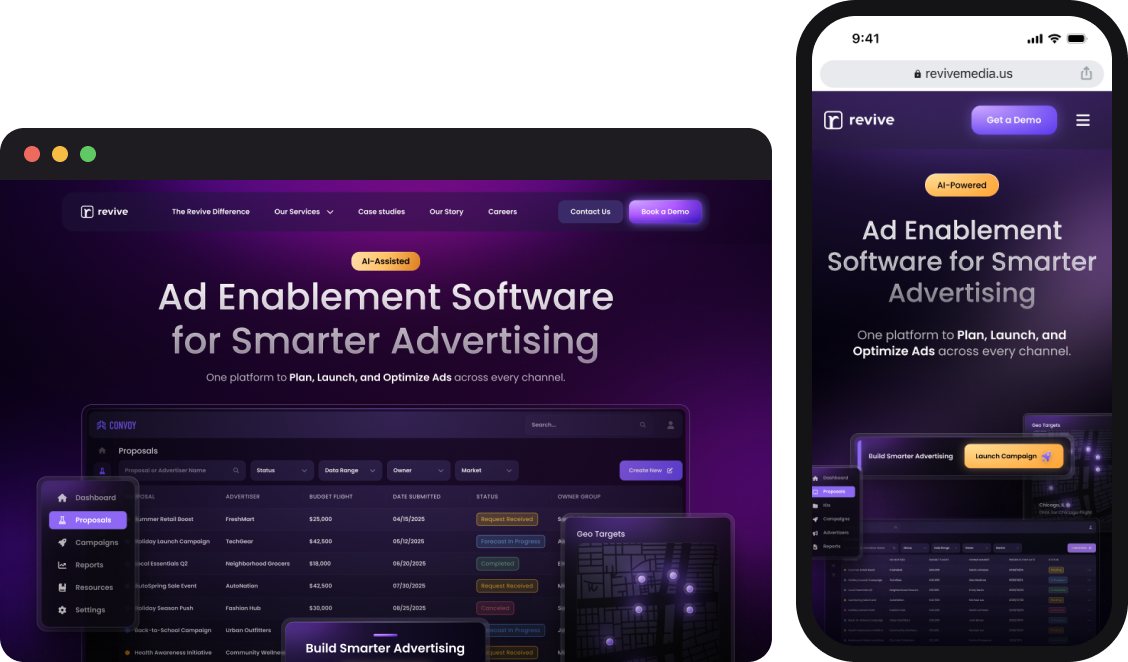
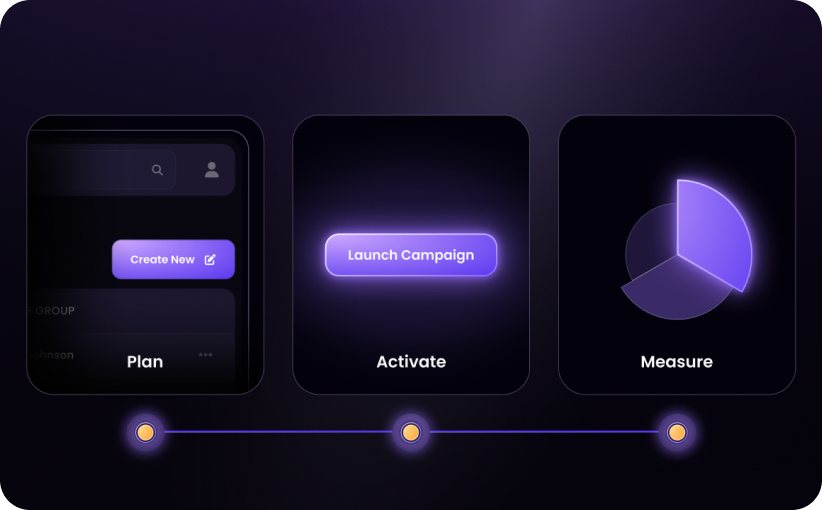
Website 2.0 explains Convoy in three words: Plan, Activate, Measure. I designed it for desktop and mobile and built it in Webflow.
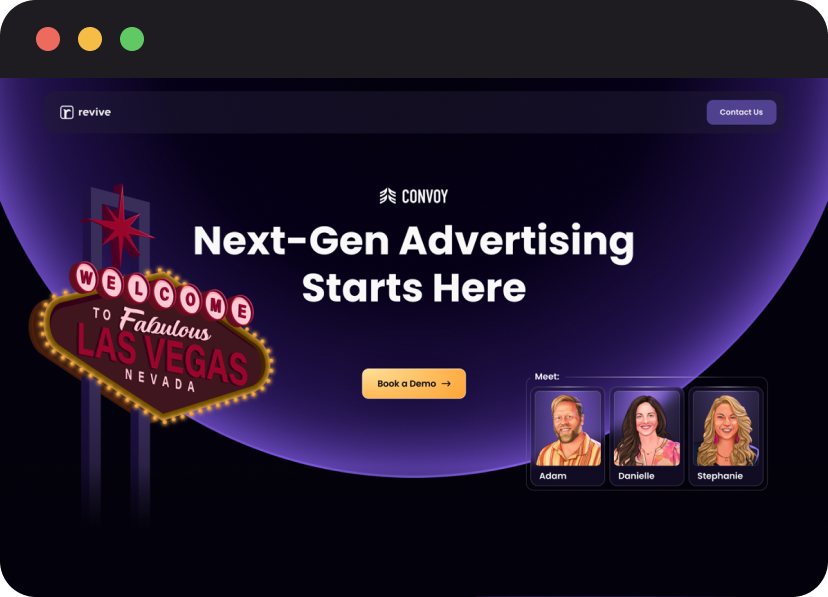
Event pages share one template, so a new one goes live fast.
Everything else the brand needed.
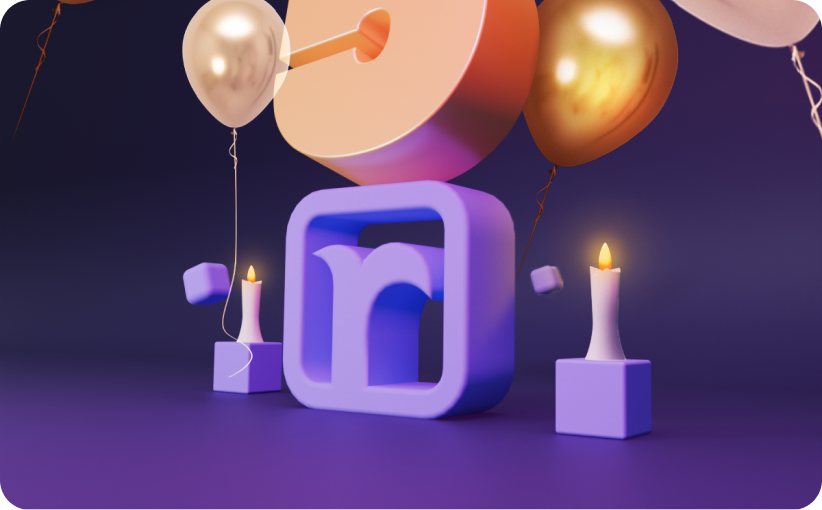
I didn’t design the original logo, but I refined it, setting construction rules and clear-space guidelines so it held up everywhere, from small favicons to vinyl banners. I kept the deep purple from the previous brand and expanded its palette with complementary colours and gradients: deep night purples with bright violet accents. I introduced Poppins, a typeface that felt warm and approachable, so our technical product never felt cold or distant. Then came the brandbook: who we are, our culture, voice and values, how we work with Amazon, and clear guidance on logo, colour and type for every team member.
 Brand
 Illustration
 Video
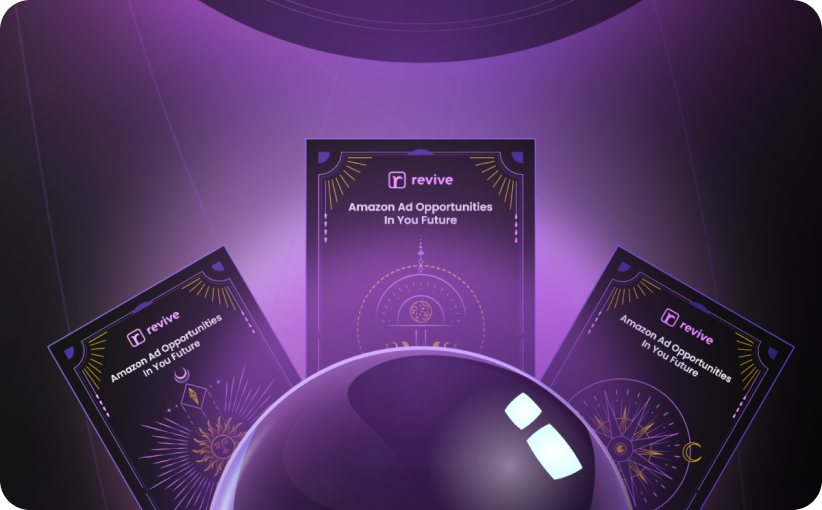 Events
 Social
 Email
A portrait on Dribbble. An email that changed my life. A story that kept growing.
My time at Revive was filled with creativity, challenges and personal growth. I learned to blend design with strategy, learned Amazon advertising from zero, and made friends across Los Angeles, Montana, the Netherlands and Pakistan, while the brand grew from agency to innovator. It prepared me for the next chapter.
Thank you to Adam, Danielle, Haley, Nolan, Chris, Fatih, Daphne, Mariah, Lynze, Dave, Kylie, Megan and Karisa.